
Tattoos are more than just ink on skin; they’re powerful symbols of identity and culture. Imagine wearing a stunning design that reflects your heritage or personal journey. Each tattoo tells a story, from intricate tribal patterns to modern interpretations that blend tradition with contemporary artistry. Discover how these stunning Indian tattoo ideas can transform not just your appearance, but also your connection to your roots and individuality. What story will you choose to share?
Traditional Tribal Tattoos of India
A forearm sleeve design flowing from wrist to elbow, combining bold black geometric lines, stylized animal motifs (tiger, peacock), interlaced foliage, and repeating dot-and-chevron borders; use varying line weight, negative space for skin contrasts, and small red accents to echo ritual pigments. Symbolically it honors protection, pride, and ancestral memory, evoking resilience and spiritual rootedness; emotionally it feels grounding, defiant, and reverent. Ideal placement: outer forearm or calf to showcase longitudinal storytelling and allow visibility for cultural conversation, with scale adjusted to limb curvature.
The Artistry of Godna Tattoos
A forearm wrap design that layers traditional Godna motifs—dot chains, geometric diamonds, stylized flora and peacock feather forms—in a rhythmic band that flows with the arm’s natural lines; rendered in deep indigo and warm sepia tones to evoke ink and earth, the composition centers a small ancestral emblem at the inner wrist to symbolize lineage and guarded memory, radiating outward with repeating nature-inspired patterns to convey continuity, resilience, and spiritual rootedness; this placement allows visibility for personal affirmation while remaining easily covered, invoking emotions of pride, protection, and connection.
Geometric Patterns of the Toda Tribe
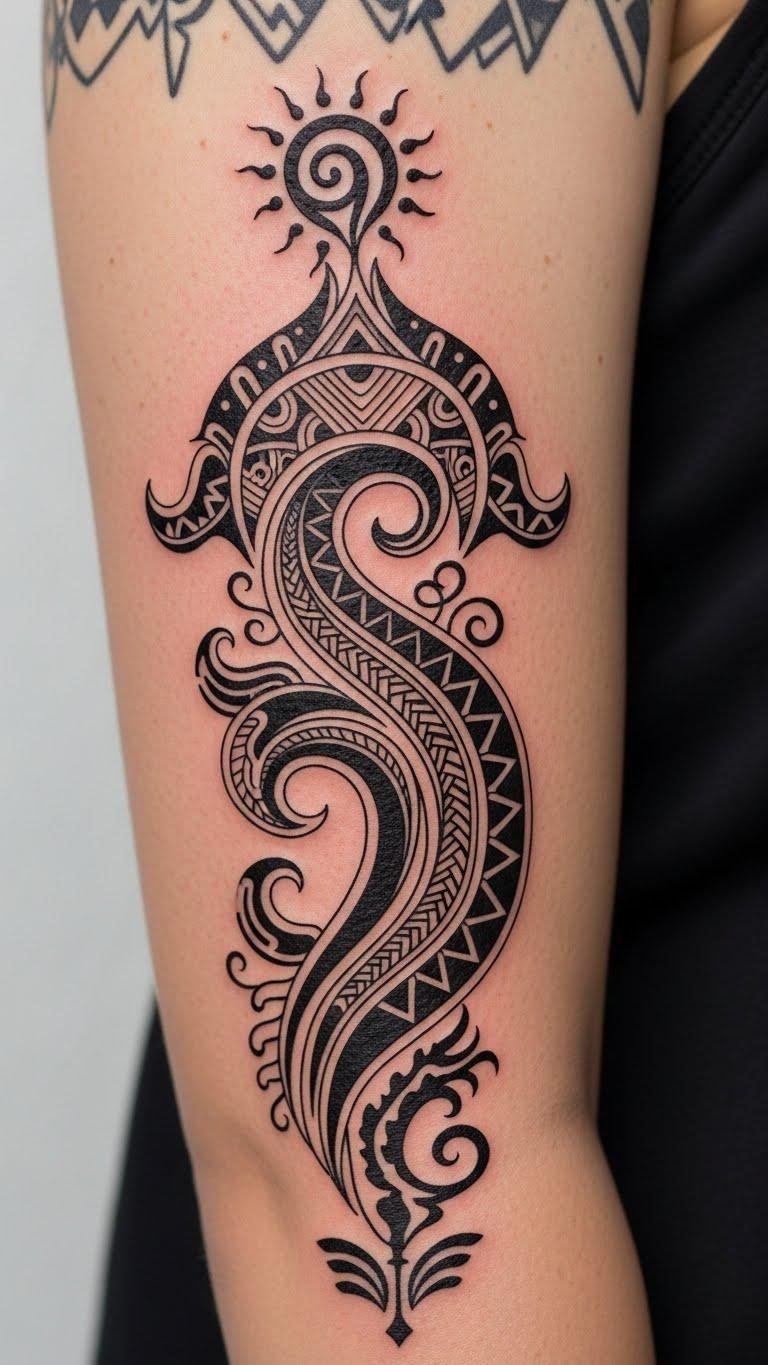
Combining bold, interlocking chevrons and concentric diamonds inspired by Toda motifs, place the design along the forearm or upper back to follow natural lines; the central diamond anchors identity while repeating geometric bands convey continuity and heritage.
The symbolism evokes communal ties and ancestral memory, imparting calm strength and rootedness; emotionally it reads as both a personal declaration and a tribute to cultural artistry.
Opt for high-contrast black lines with subtle shading between bands to emphasize geometry while allowing room for small crimson or ochre accents to reference traditional hues.
Spiritual Significance of Kutia Kondh Tattoos
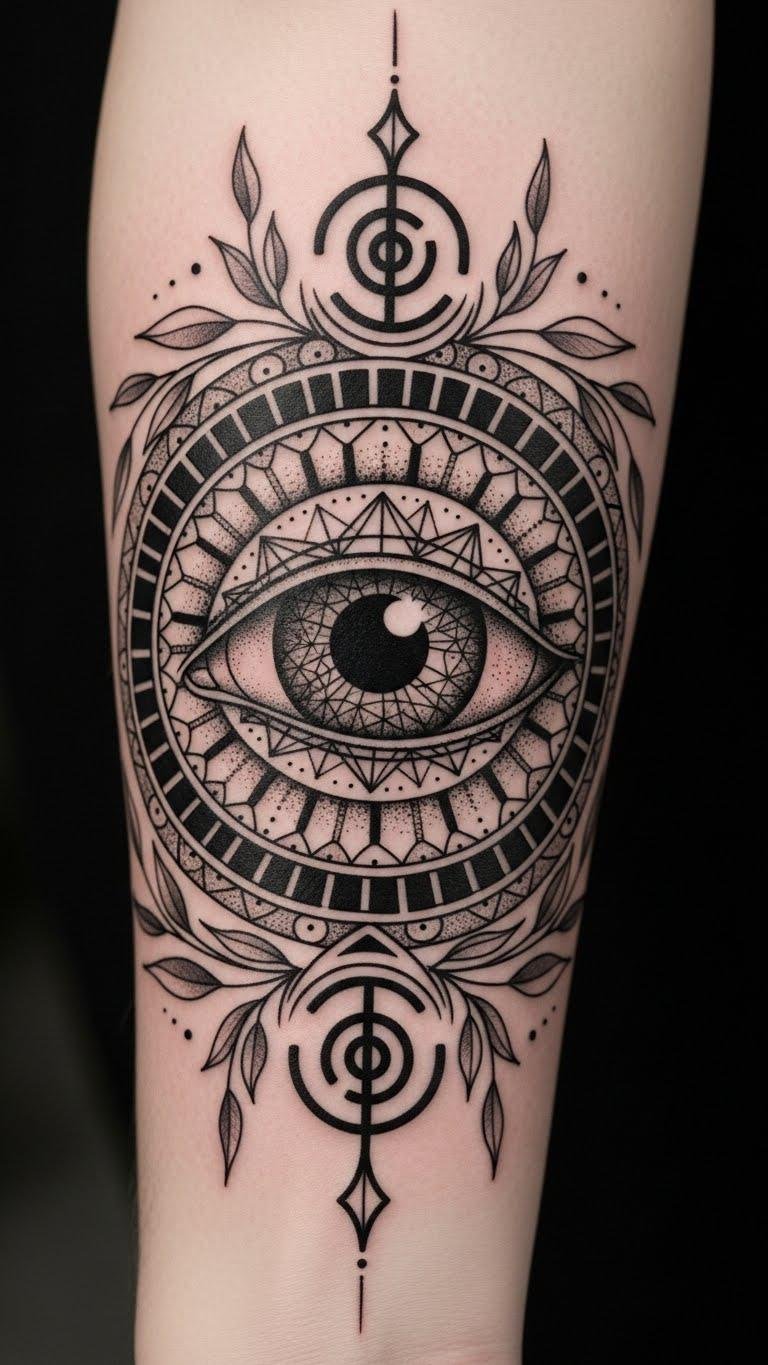
While the intricate tattoos of the Kutia Kondh tribe may appear as mere body art, they hold profound spiritual significance that transcends aesthetics.
Each design symbolizes your spiritual identity, connecting you to ancestral recognition. These tattoos act as protective talismans, ensuring you remain visible to the spirit world, celebrating your heritage, and embodying the deep cultural beliefs of your ancestors.
Nature-Inspired Designs in Mer Tribe Tattoos
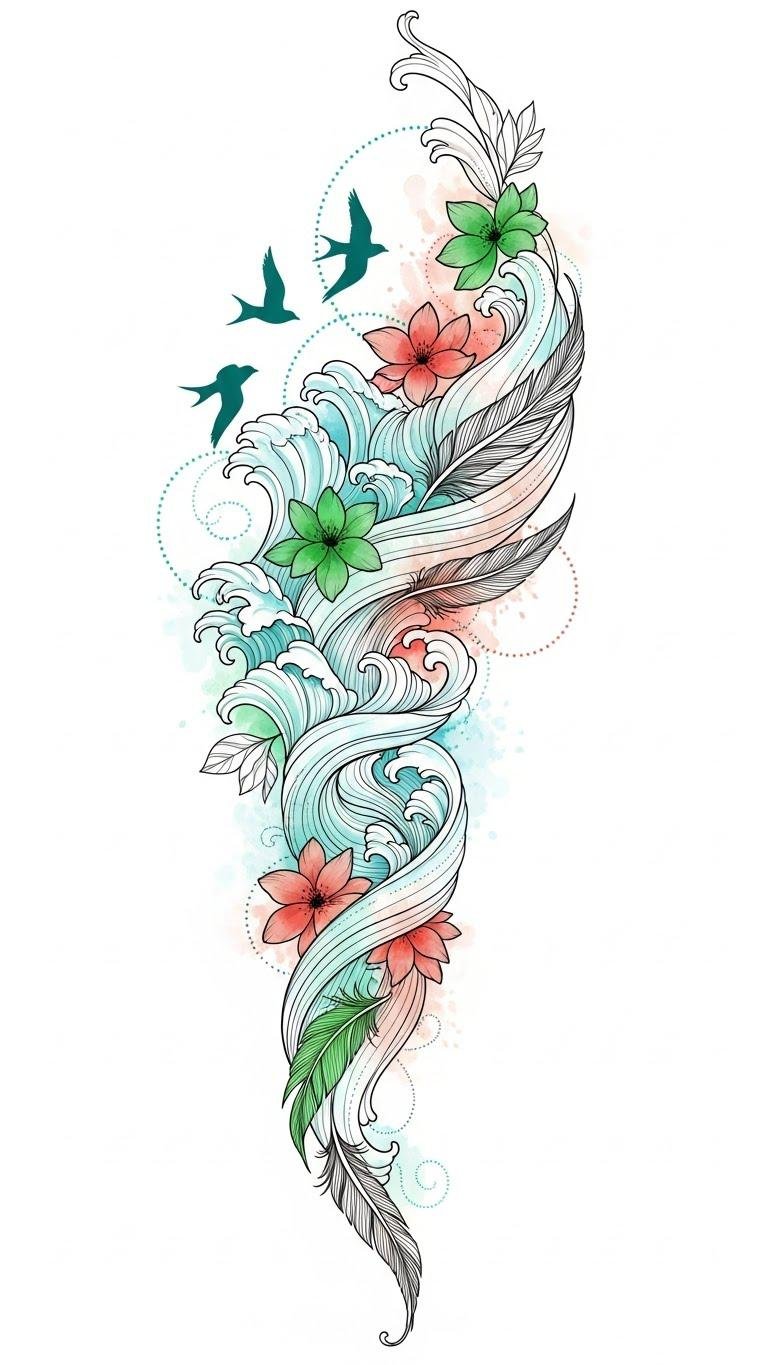
Have you ever wondered how nature inspires the intricate tattoos of the Mer tribe? Their stunning designs feature nature motifs like flowing rivers, vibrant flora, and soaring birds, embodying mer symbolism that connects them to the earth.
Each tattoo tells a story, celebrating freedom and unity with nature, allowing you to express your individuality while honoring the beauty that surrounds us. This design channels that narrative: rivers symbolize life’s continuity and movement; flora represents growth and rootedness; birds convey freedom and aspiration.
Emotionally, it evokes calm resilience and joyful connection. Ideal placements are around the upper arm as a wrap to emphasize movement, across the shoulder blade for a narrative panel, or centered on the upper back for a larger, ceremonial feel.
Symbolism in Madhya Pradesh Tribal Tattoos

This design concept layers a central stylized chandrama—crescent moon with filigree rays—framed by symmetrical bichhu motifs on either side, interwoven with tribal geometric bands and tiny leaf accents; use bold black linework with selective red and indigo fills for emphasis. Symbolism: the moon represents guidance and cyclical renewal, the scorpions convey protection and resilience, the geometric bands signify community ties and continuity; the emotional intent is grounding, proud, and protective. Ideal placement: upper chest or across the upper back to sit close to the heart and spine, allowing symmetry and visibility while honoring ancestral connection.
The Protective Power of Kollam Tattoos
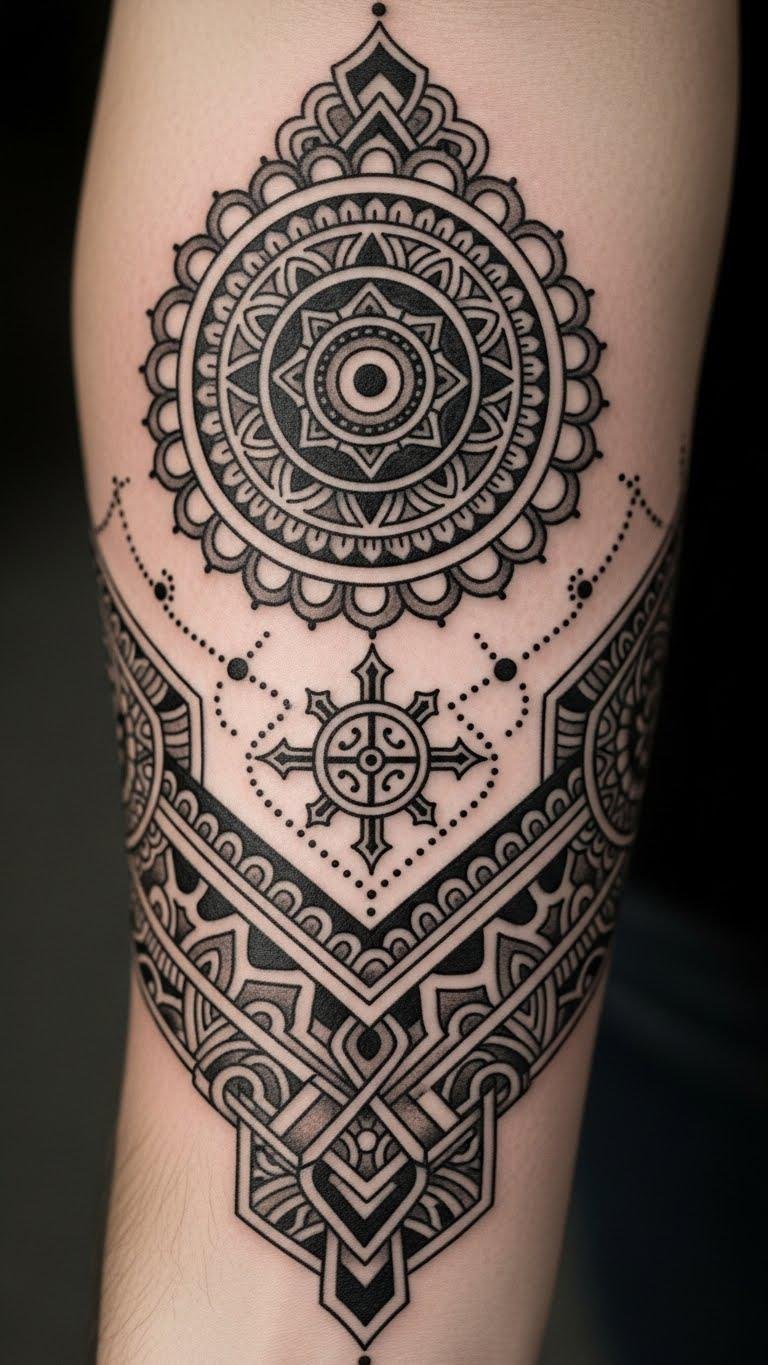
The design marries the original text’s sacred kollam symbolism with visual elements that suggest protection and containment: concentric rings and interlocking geometric traps evoke barriers against malevolent forces, while filigree and dotwork soften the structure and add spiritual resonance.
Emotionally it projects quiet strength and a yearning for freedom—rooted in tradition yet adaptable to modern expression.
Best placed on the inner forearm or upper chest where the talisman can be seen easily, the piece works as both personal shield and visible statement of cultural connection.
Cultural Heritage Embedded in Pachakutharathu
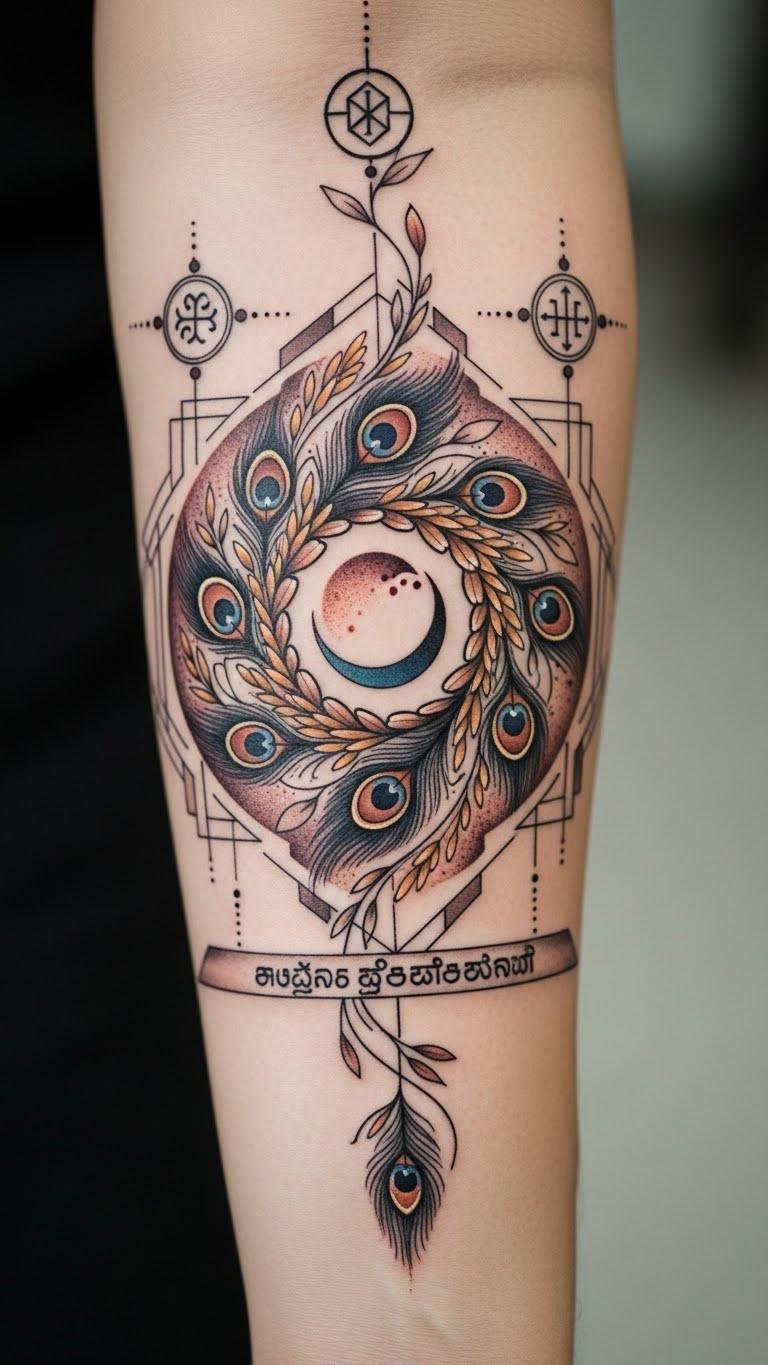
The design channels the Pachakutharathu tattoos’ rich history and vibrant symbolism by placing the mandala over the outer forearm so each element reads clearly and can be seen during daily movements; peacock feathers represent beauty and pride, rice grains signify sustenance and ancestral continuity, and the vine with ancestral sigils binds personal lineage to present identity.
Warm earthy inks evoke heritage and grounding, dotwork and negative space convey freedom and individuality, while the script band embeds a personal or familial mantra. This placement allows both public display and private reflection, transforming skin into a canvas that celebrates heritage and empowers the spirit.
The Use of Natural Materials in Tattooing
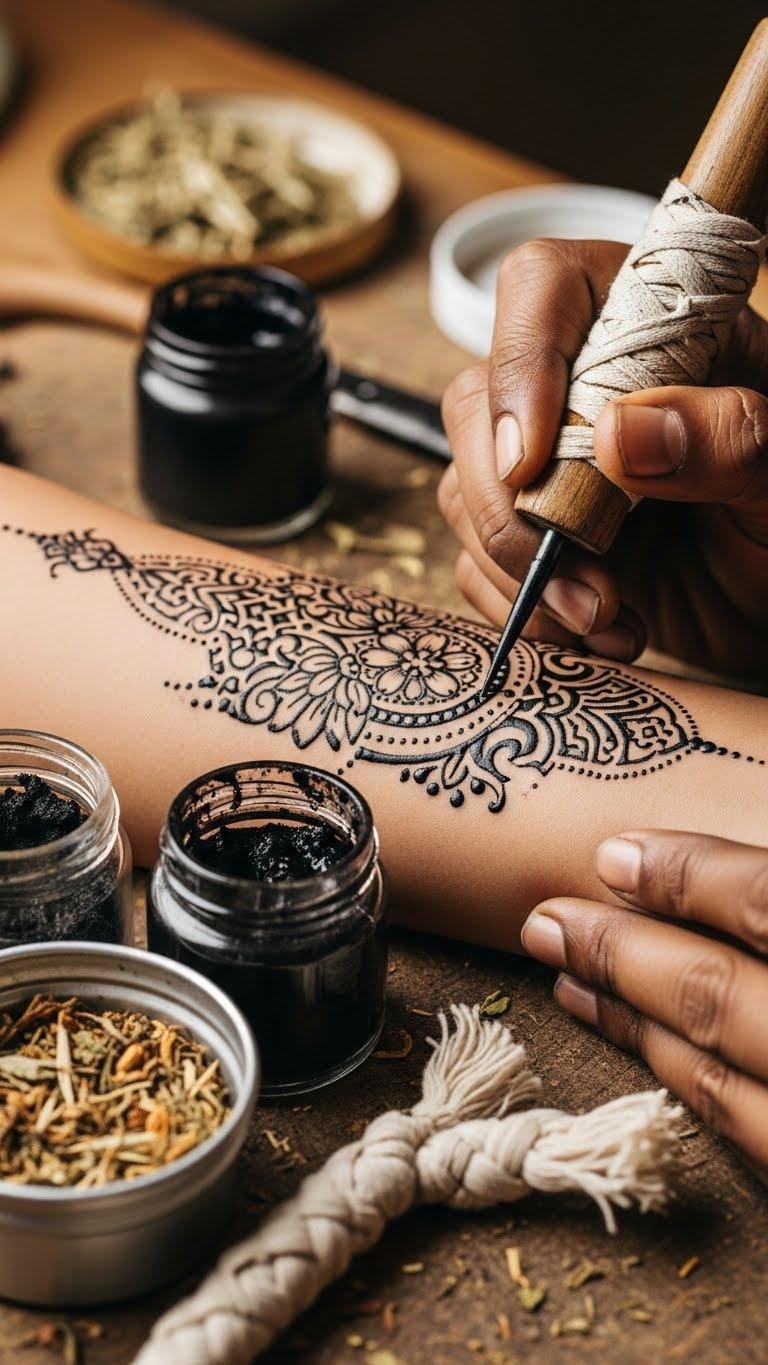
Although many modern tattoos rely on synthetic inks and advanced techniques, traditional Indian tattooing remains deeply connected to the earth, utilizing natural materials that reflect cultural heritage and craftsmanship.
You can experience the magic of natural ink, crafted from soot and herbs, as ancient techniques breathe life into your skin, transforming your identity with every meaningful mark, celebrating freedom, history, and artistry.
This design centers on continuity between body and tradition: flowing tribal motifs and floral elements rendered in soot-black dotwork evoke ancestry and resilience, while the visible jars and herbs emphasize the tactile, earthbound process that grounds the wearer emotionally.
Ideal placement is the inner forearm or calf where the piece can be both intimate and publicly shown; the pattern wraps gently to follow muscle lines, fostering a sense of personal narrative and quiet pride, inviting reflection on freedom, history, and artistic lineage.
Stick-and-Poke: A Traditional Technique
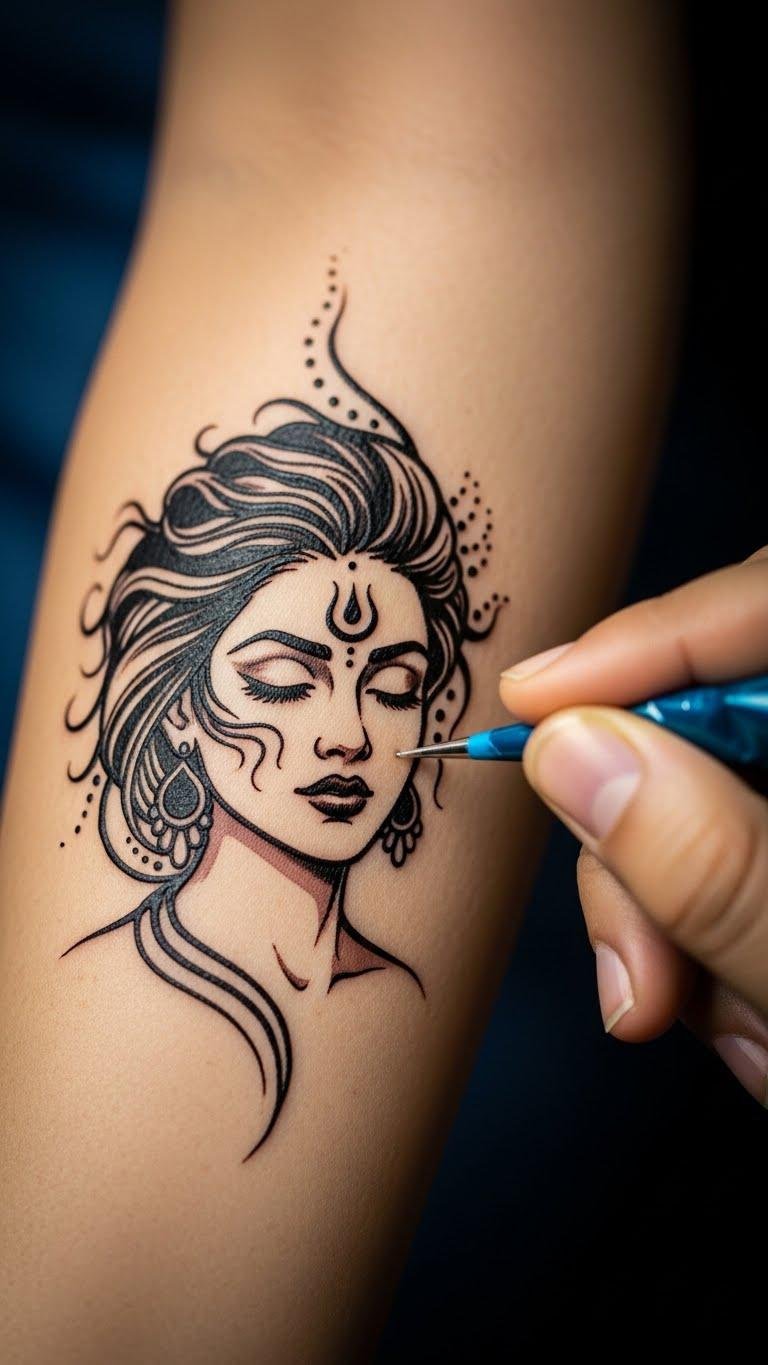
A delicate linear composition: a central vertical stem of fine dots and short lines inspired by traditional Indian motifs, flanked by symmetrical paisley shapes formed from stippling and tiny crosses, finished with small sunburst points and seed-like accents; ideal for inner forearm, nape, or along the ribcage where its intimate, hand-applied aesthetic reads as a personal talisman.
The design symbolizes a bridge between freedom and heritage—each deliberate puncture representing intention, memory, and respect for ancestral craft—evoking quiet reverence, personal identity, and the emotional warmth of a handcrafted ritual.
Ancient Ink Recipes for Tattoos
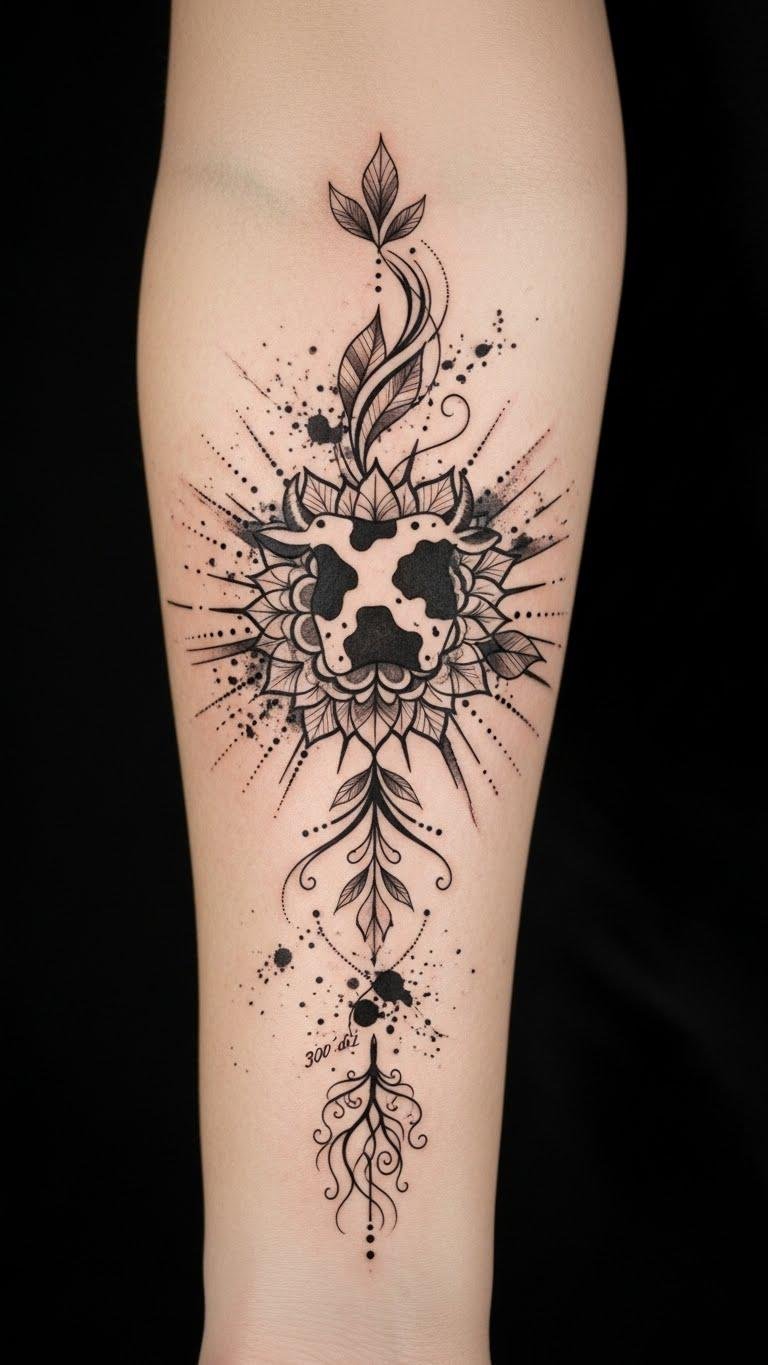
When exploring the vibrant world of ancient Indian tattooing, you’ll discover that the ink recipes used by traditional artists are as rich and diverse as the designs themselves.
Ancient ink was crafted from soot, blended with cow urine or herbal elements for healing. These tattoo recipes not only colored skin but also connected wearers to their roots, embodying freedom and identity.
The design channels those elements into a forearm piece: soot-black swirls and mandala geometry symbolize ancestral knowledge, cow-hide patterns and herbal leaves reference healing and the materials used, while the script-like tendrils express personal identity and freedom.
Placed on the inner forearm for visibility and intimacy, the tattoo evokes quiet pride, continuity, and resilience.
Tattoos as Markers of Social Status
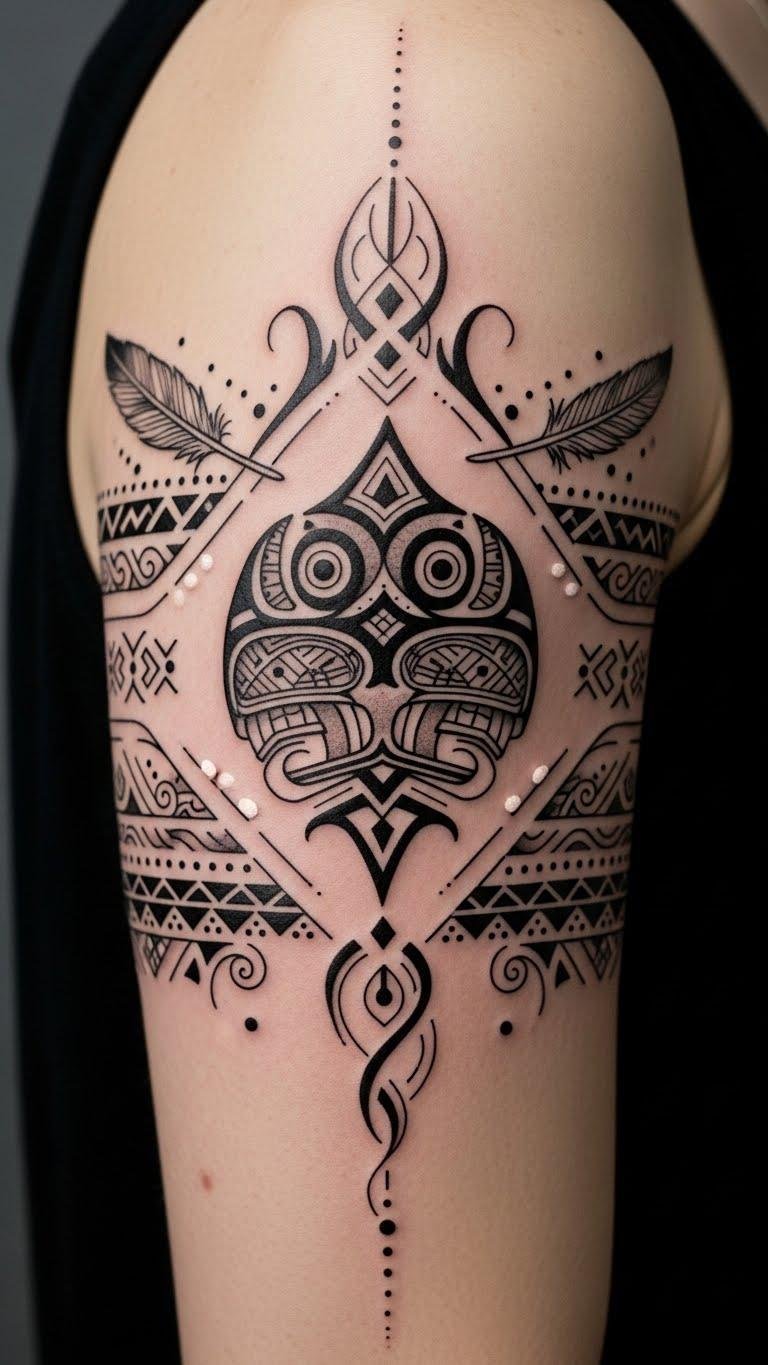
Tattoos have long been more than mere body art; they’re powerful symbols of social status that reflect one’s identity and place within a community. These social markers serve as status symbols, celebrating your tribal heritage and artistic interpretations. Each design carries cultural significance and traditional meanings, weaving your identity expressions into the fabric of societal roles, showcasing not just who you are, but where you belong.
The concept uses the central totem as a focal emblem of heritage and rank, the surrounding motifs as personal narratives and achievements, and the wrapping band to suggest belonging and continuity; emotionally it aims to evoke pride, dignity, and rootedness.
Ideal placement is the upper arm where the form reads well in movement and can be shown or concealed, with proportions adjustable to shoulder or forearm as desired.
Ritualistic Tattoos and Community Identity
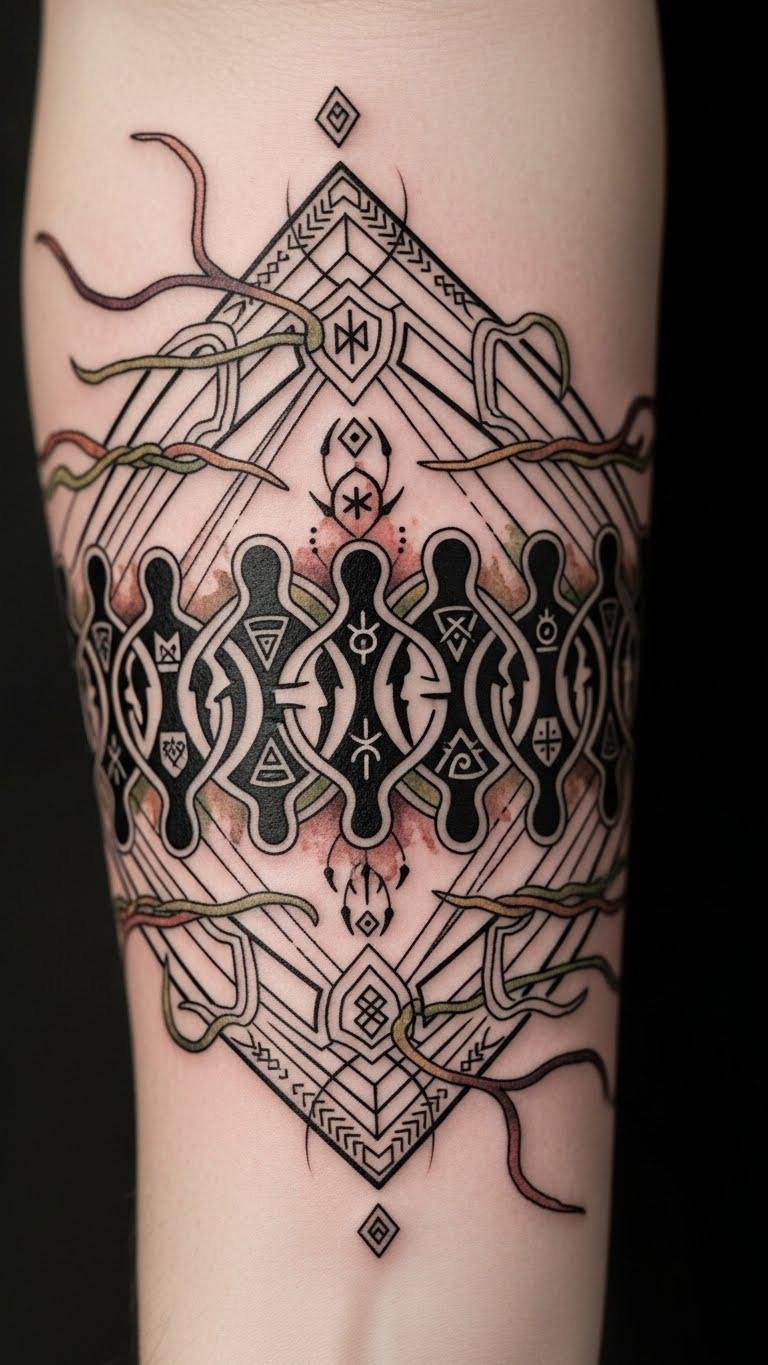
Ritualistic tattoos serve as profound connections to community identity, weaving personal stories into the collective tapestry of cultural heritage. They embody ritual significance and cultural symbolism, fostering community bonds and identity transformation.
These tattoos reflect protective beliefs and ancestral recognition, nurturing social cohesion while establishing spiritual connections. Each mark resonates deeply, celebrating the vibrant essence of your community and its rich traditions.
This design concept uses interlaced geometry and ancestral silhouettes to symbolize the weave between individual stories and collective heritage; protective sigils and woven-thread motifs evoke guardianship and ongoing ritual practice.
Emotionally it aims to feel grounding, dignified, and connective—invoking pride and belonging while honoring ancestors. Ideal placement is the inner forearm as a visible yet intimate band that wraps the arm, allowing the wearer to see and touch the marks during personal ritual or community gatherings.
The Role of Tattoos in Rites of Passage
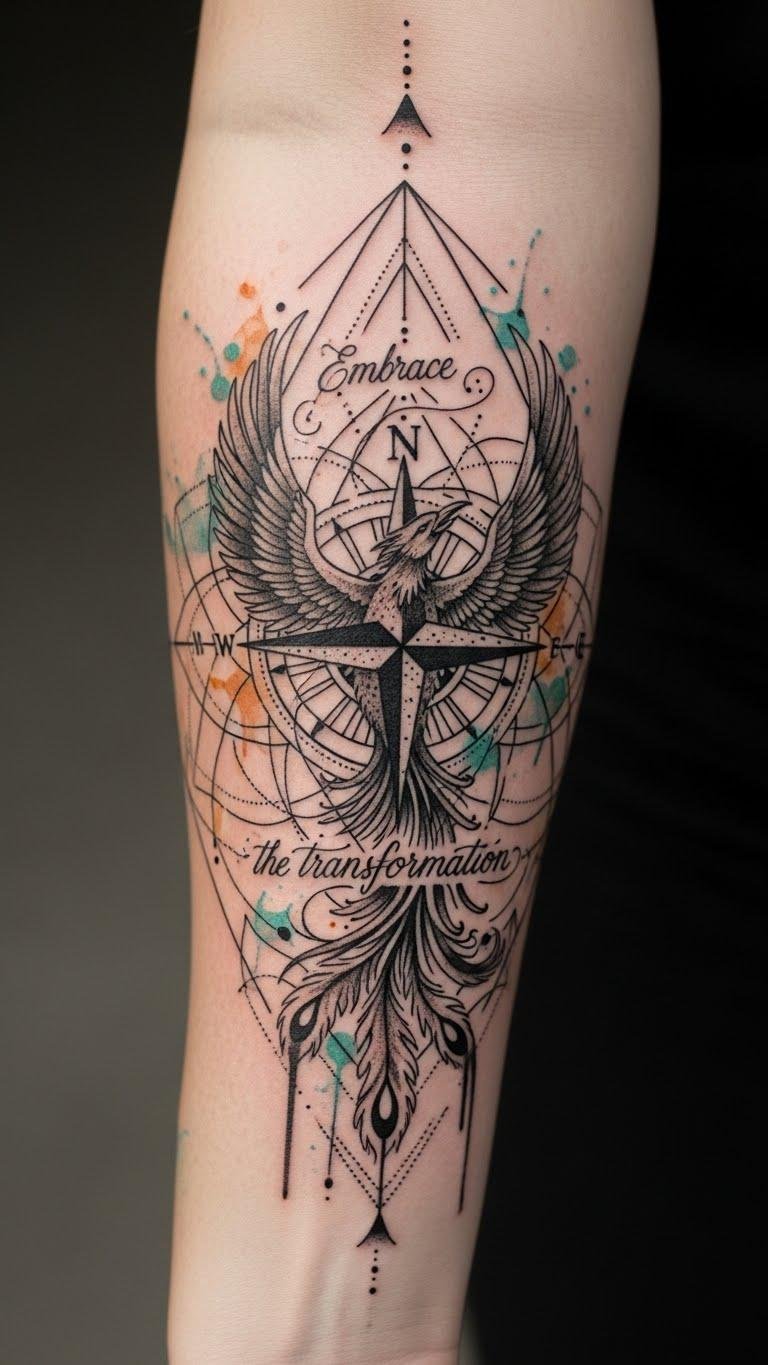
As you begin significant life changes, the markings etched onto your skin can become powerful symbols of your journey. These tattoos mark your rite of passage, capturing the essence of your identity transformation. Each inked design tells a story of growth, resilience, and freedom, guiding you through tattoo journeys that celebrate who you’re and who you’re becoming. Embrace the transformation!
The design merges navigation and rebirth: the compass rose represents direction and choices during transition, the phoenix conveys renewal and resilience, and the mandala geometry signifies inner balance and identity forging.
Teal and amber watercolor hints evoke calm renewal and warm courage; fine-line dotwork adds intimacy and timelessness. Ideal on the inner forearm or wrapping slightly around the wrist so the compass faces outward—visible during moments of decision—this placement balances personal meaning with public declaration, inviting both quiet reflection and confident movement forward.
Ancestral Motifs in Tattoo Designs
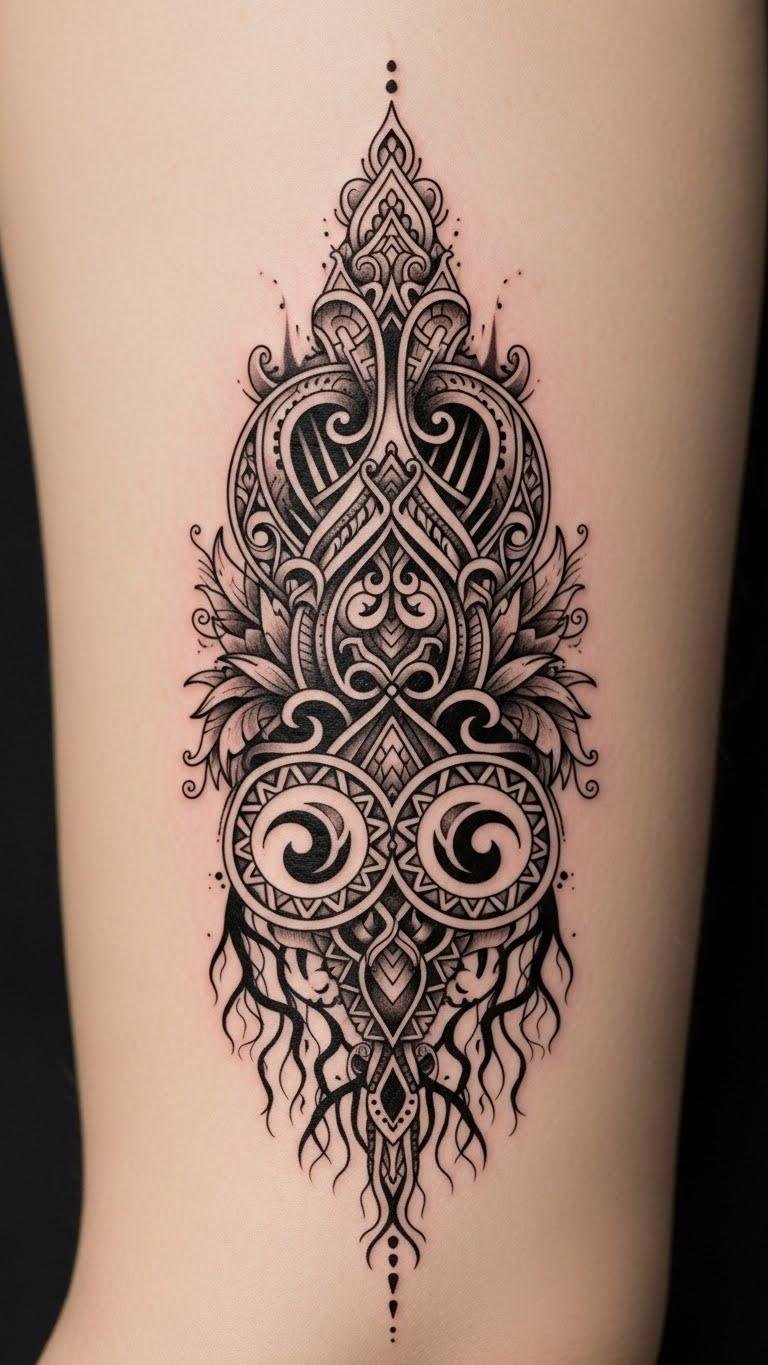
A flowing half-sleeve that integrates stylized ancestral motifs—interlocking geometric patterns, a winding ancestral tree, and subtle bird silhouettes—designed to follow the natural curve of the arm; rendered in fine black linework with selective dotwork shading and a hint of muted color in ochre or deep indigo to accent key elements.
Symbolically, the tree represents lineage and growth, geometric motifs carry specific cultural meanings and continuity, and birds suggest freedom and the presence of guiding spirits; emotionally the piece evokes reverence, belonging, and quiet strength.
Ideal placement is along the outer arm wrapping toward the inner elbow so the motifs read as a continuous story when the arm moves, with size adaptable from medium band to full half-sleeve depending on how prominently the wearer wishes to display their connection to heritage.
Tattoos as Amulets Against Misfortune
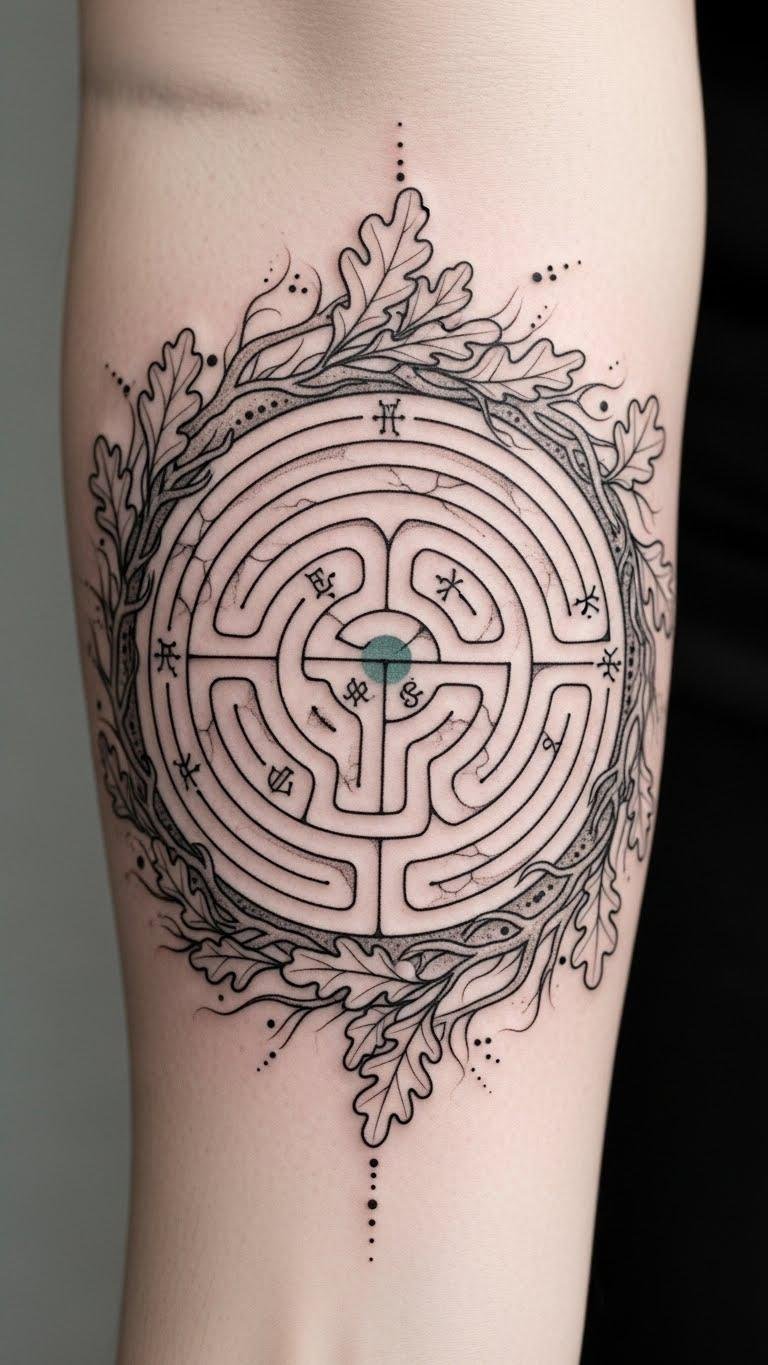
Tattoos have long been regarded as powerful amulets, offering protection against the misfortunes life throws your way.
These tattoo talismans embody protective artistry, each design infused with intention.
Whether it’s a labyrinth pattern to trap negativity or a nature-inspired motif to summon strength, these tattoos transform your skin into a shield, empowering you to navigate life’s challenges with confidence and resilience.
The design’s symbolism—labyrinth as barrier, oak leaves and roots for endurance, hidden sigils for personal intent—evokes calm determination and guarded optimism; placed on the inner forearm it reads as both intimate armor and visible reminder, eliciting steady comfort when glanced at or touched.
Healing Properties of Tattoo Motifs
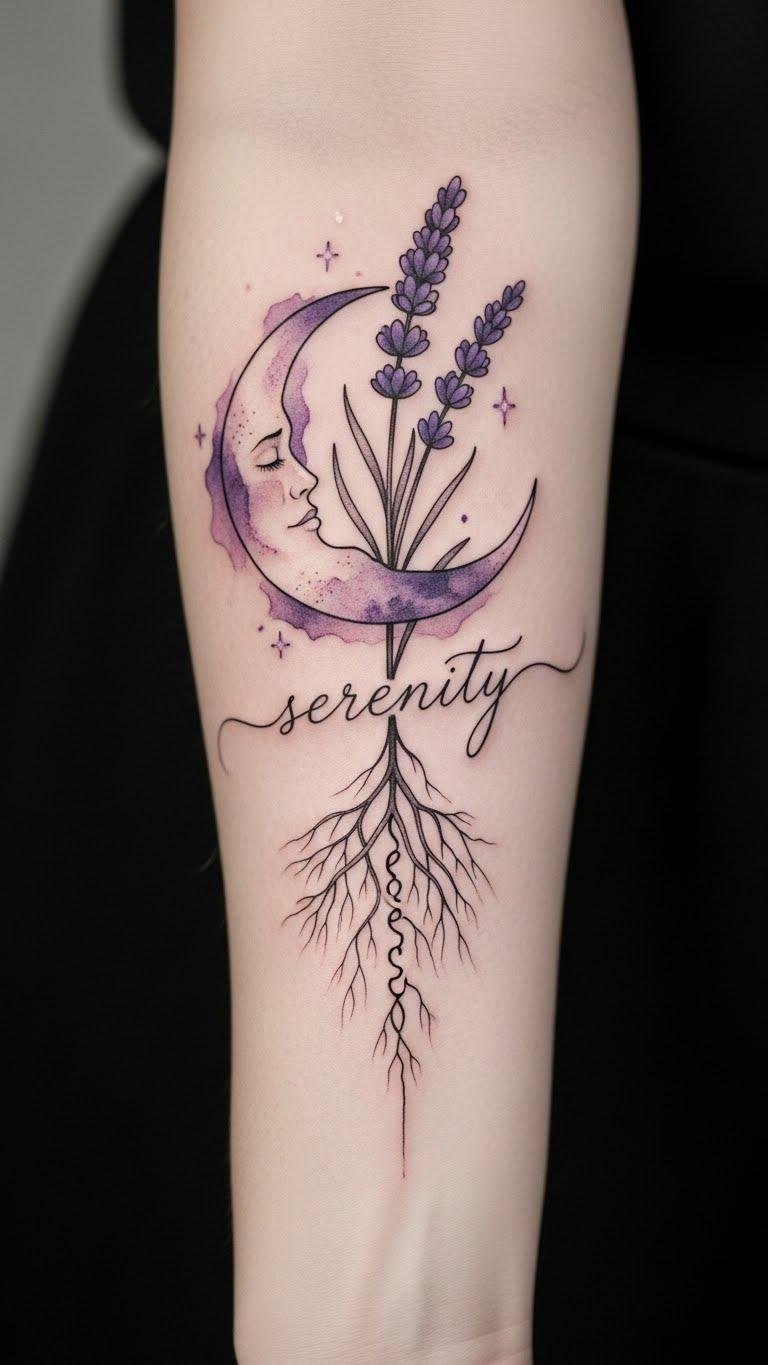
When you explore the enchanting world of tattoo motifs, you’ll discover their remarkable capacity to heal both body and spirit.
The crescent moon symbolizes cycles and renewal, lavender represents calm and restorative scent-memory, and the roots-script fusion ties personal narrative to grounding strength; together they invite protection, comfort, and empowerment.
Emotionally the piece evokes quiet resilience and acceptance, soothing during stress while affirming identity.
Ideal placement is the inner forearm or ribcage where the wearer can see and feel the design regularly, allowing it to function as a talisman during moments of struggle and self-discovery.
The Evolution of Tattoo Practices in India
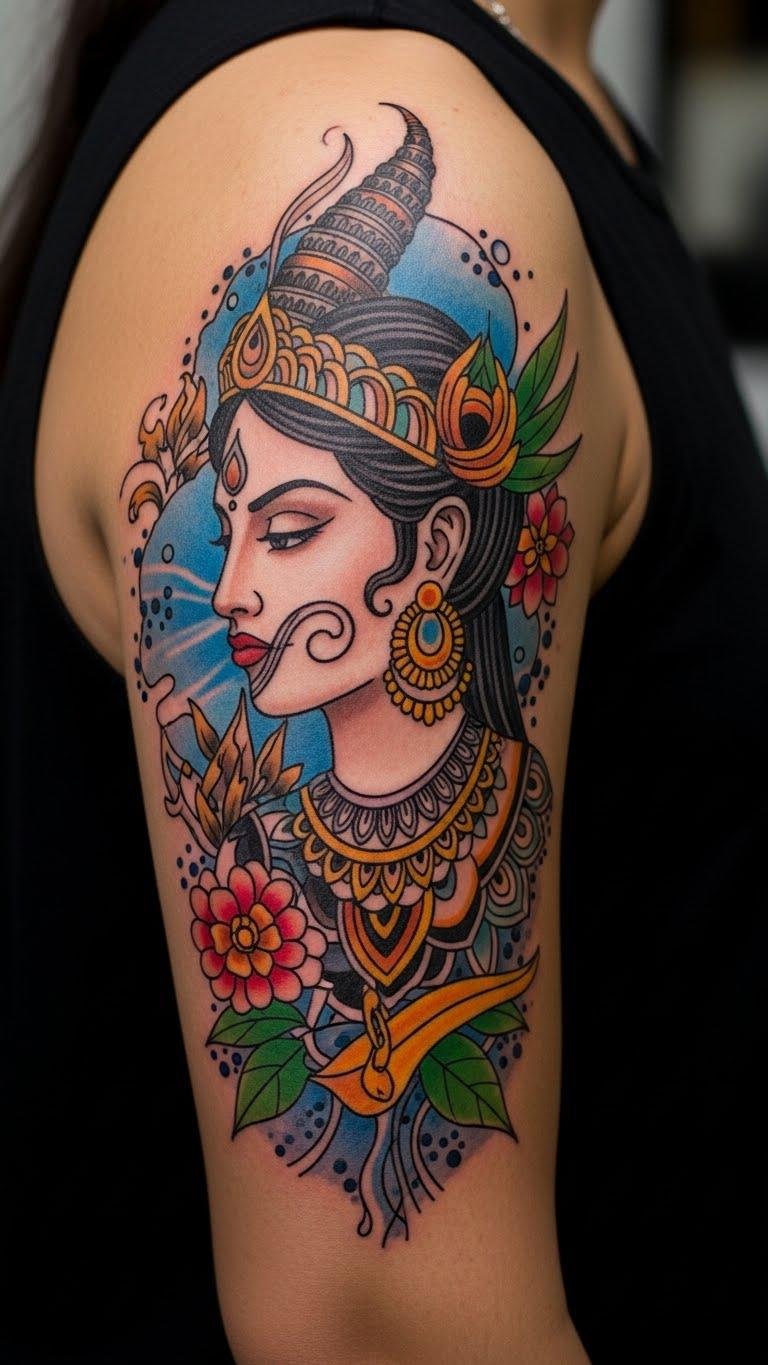
A sweeping half-sleeve design that layers stylized tribal motifs, mandala elements, and flowing scriptural ribbons, using bold black linework with selective saffron and indigo accents; central image combines an abstracted tree of life with geometric patterns inspired by regional tribal art, framed by ornamental paisley and tiny deity silhouettes to suggest spirituality and identity. Symbolism blends continuity (tree roots), cultural evolution (interleaved motifs), and personal freedom (open flowing ribbons); emotionally the piece evokes pride, belonging, and introspective journey. Ideal placement: upper arm wrapping to shoulder, adaptable to chest or back for larger scale.
Contemporary Adaptations of Traditional Designs
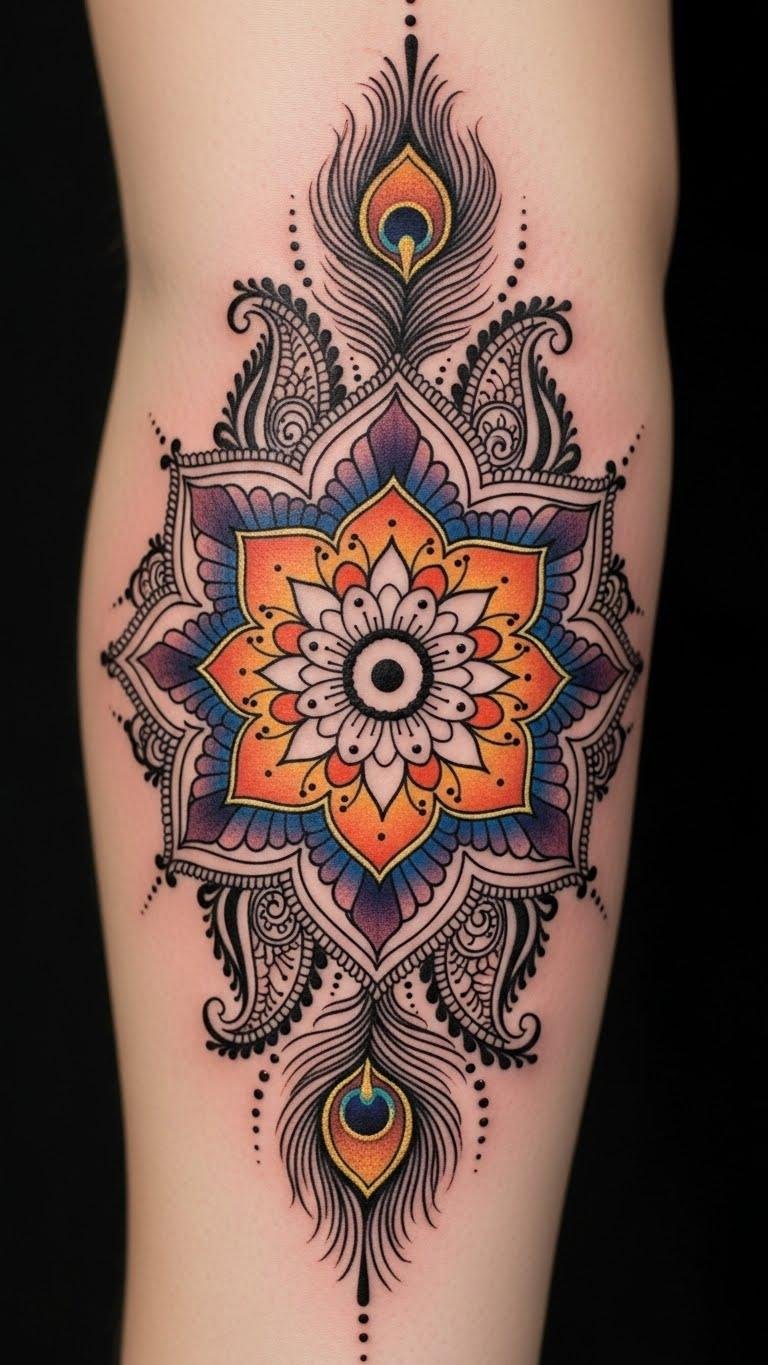
The vibrant tapestry of Indian tattoo culture is being reimagined as traditional designs find their place in contemporary contexts. You’ll discover stunning pieces that blend traditional motifs with fresh, innovative styles.
Contemporary interpretations breathe new life into ancient symbols, allowing you to express your identity in powerful ways. Each tattoo becomes a personal narrative, connecting you to history while embracing your unique journey.
This design uses the mandala as grounding center for balance and introspection, paisleys and peacock feathers to evoke heritage, and geometric lines to signify personal structure and modernity; placed on the forearm or upper back it invites visibility and contemplation, conveying resilience, pride, and an intimate link between past and self.
The Significance of Mehndi in Modern Culture
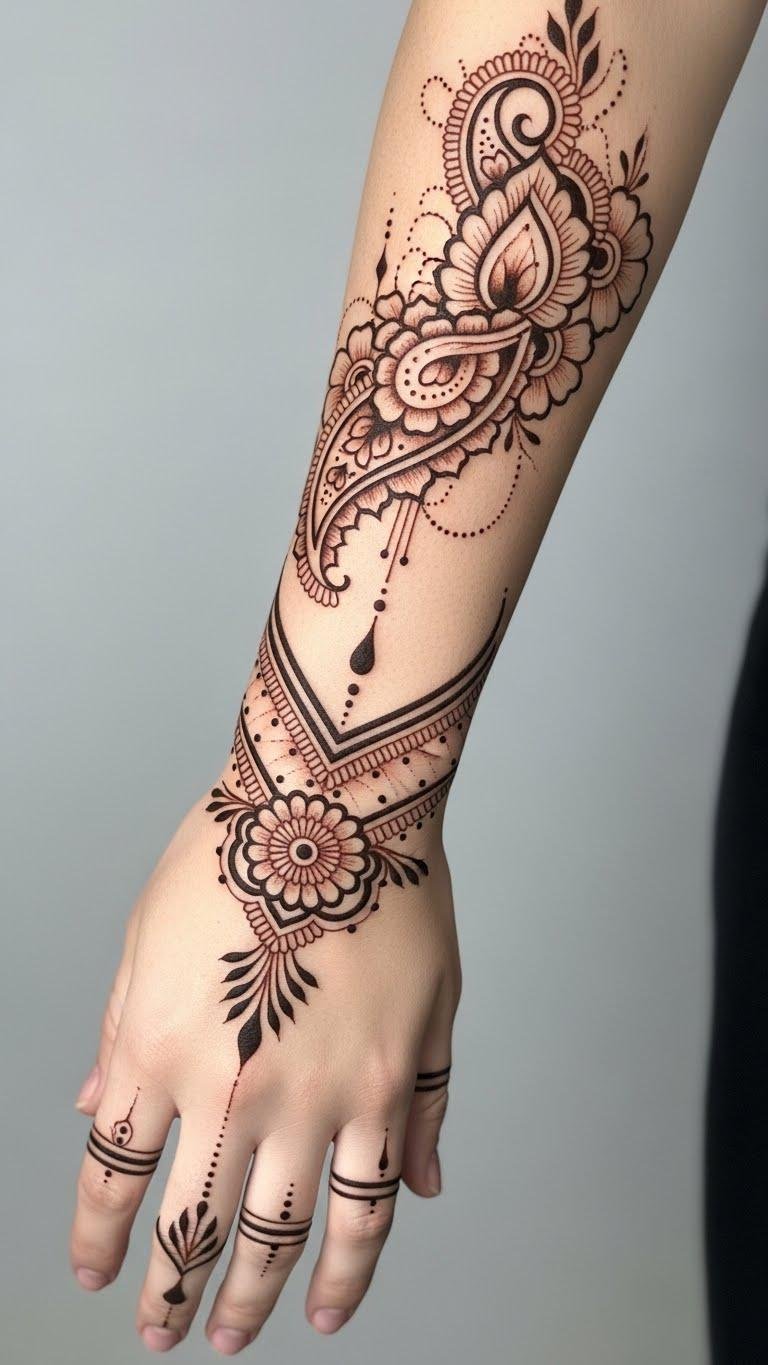
Mehndi, with its intricate patterns and rich history, has blossomed into a vibrant symbol of celebration in modern culture. You’ll find its mehndi significance shining brightly in weddings and festivals, where it transforms the ordinary into extraordinary.
As you adorn your skin with these beautiful designs, you embrace a connection to tradition while making a statement in today’s modern ceremonies. The design symbolizes celebration, continuity, and personal identity—paisleys for fertility and life, mandala for unity, and flowing vines for growth.
Emotionally it conveys joy, reverence, and a bridge between past and present. Ideal placement is forearm and hand, wrapping the wrist like a cuff and extending delicately onto fingers for visibility during ceremonies, or along the inner forearm for a subtler, personal reminder.
Celebratory Tattoos for Festivals and Ceremonies
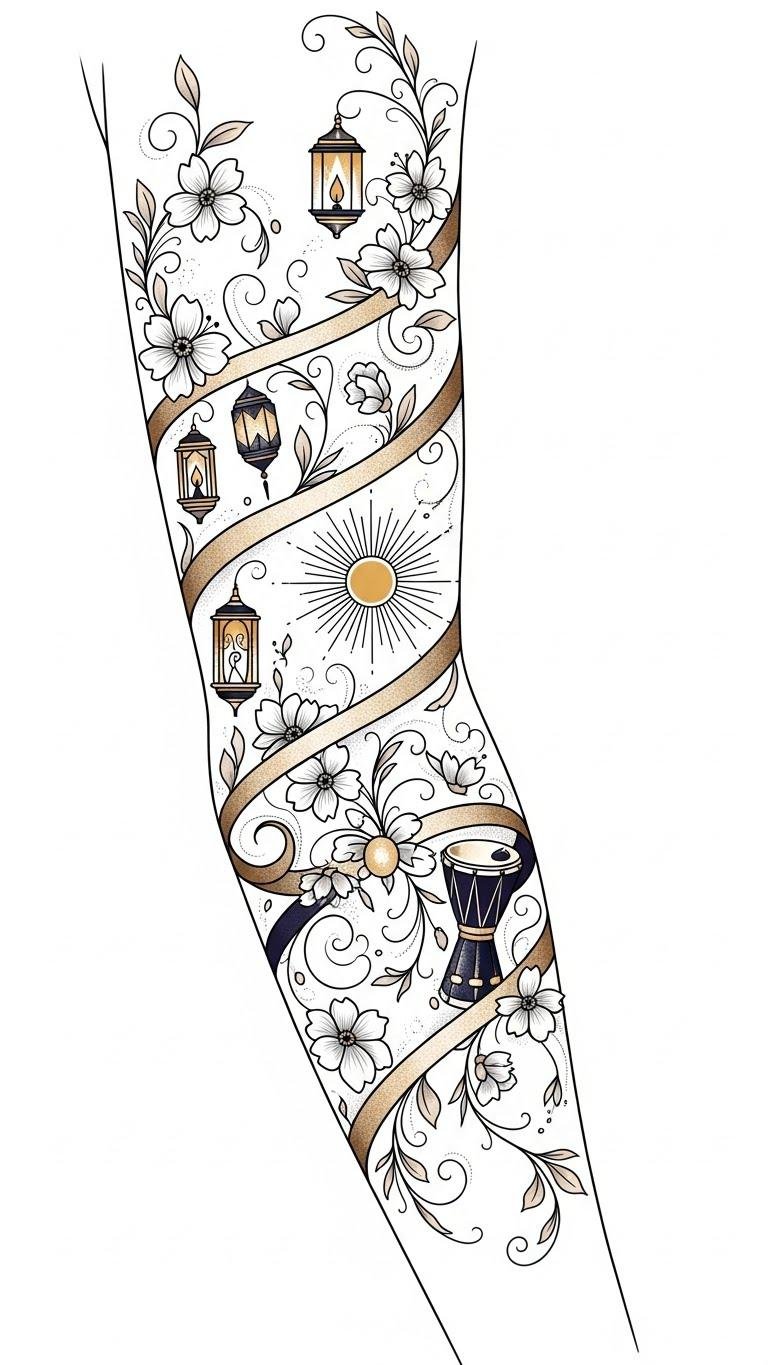
As you prepare for a festival or ceremony, celebratory tattoos can become a vibrant expression of joy and cultural heritage, weaving your personal story into the fabric of tradition.
Embrace celebratory motifs that resonate with festival significance, whether it’s intricate designs inspired by nature or symbols of community.
Each mark tells a tale, connecting you deeper to your roots and the spirit of celebration.
Tattoos Reflecting Personal Identity
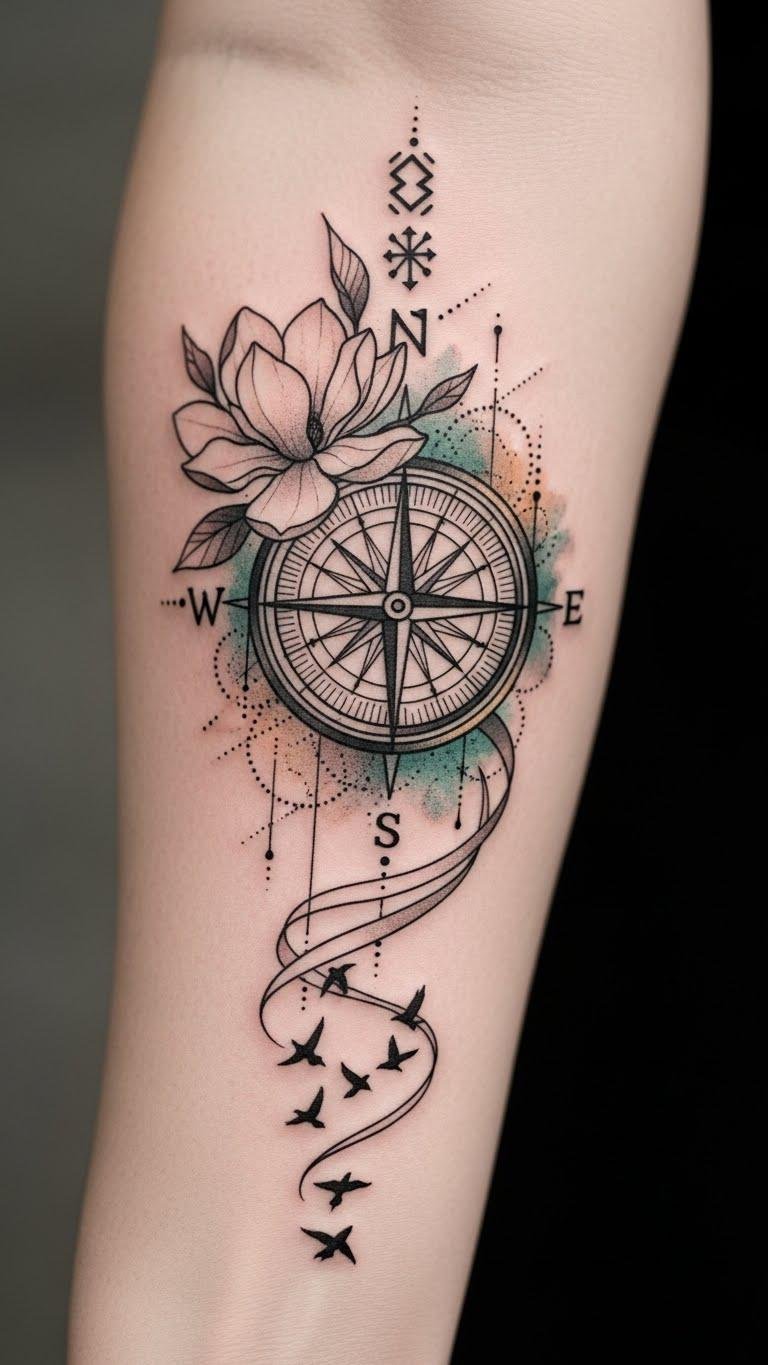
When you choose a tattoo that reflects your personal identity, you’re not just decorating your skin; you’re telling the world who you’re and what you value. Each design is a piece of identity exploration, rich with tattoo symbolism that resonates with your journey.
From nature motifs to ancestral symbols, these tattoos empower you to embrace your true self and express your freedom. The compass symbolizes guidance and personal direction, the magnolia represents resilience and beauty borne from roots, ancestral glyphs honor lineage and continuity, and the birds imply liberation and forward motion; rendered in fine linework with soft watercolor tones, the piece evokes introspection and quiet strength—ideal for the inner forearm where visibility is personal yet shareable, allowing the wearer to feel grounded and seen.
The Intersection of Art and Spirituality in Tattoos

While tattoos often start as artistic expressions, they transcend mere aesthetics to embody deep spiritual significance. Each design can forge spiritual connections, weaving your identity into the fabric of ancient beliefs.
These tattoos become personal talismans, celebrating freedom and individuality. By embracing their artistic expressions, you honor your journey, channeling energy and intention into a vivid tapestry that resonates with your soul’s essence.
The phoenix symbolizes rebirth and resilience, the sigils represent ancestral wisdom and personal intention; watercolor and gold suggest the interplay of emotion and sacred light. Emotionally the piece offers uplift and quiet power, meant to be felt more than declared.
Placement on the forearm allows visibility for daily affirmation and privacy when needed; size and flow follow the arm’s musculature so the imagery moves with the body and feels integrated rather than imposed.
Modern Indian Tattoo Artists Reviving Tradition
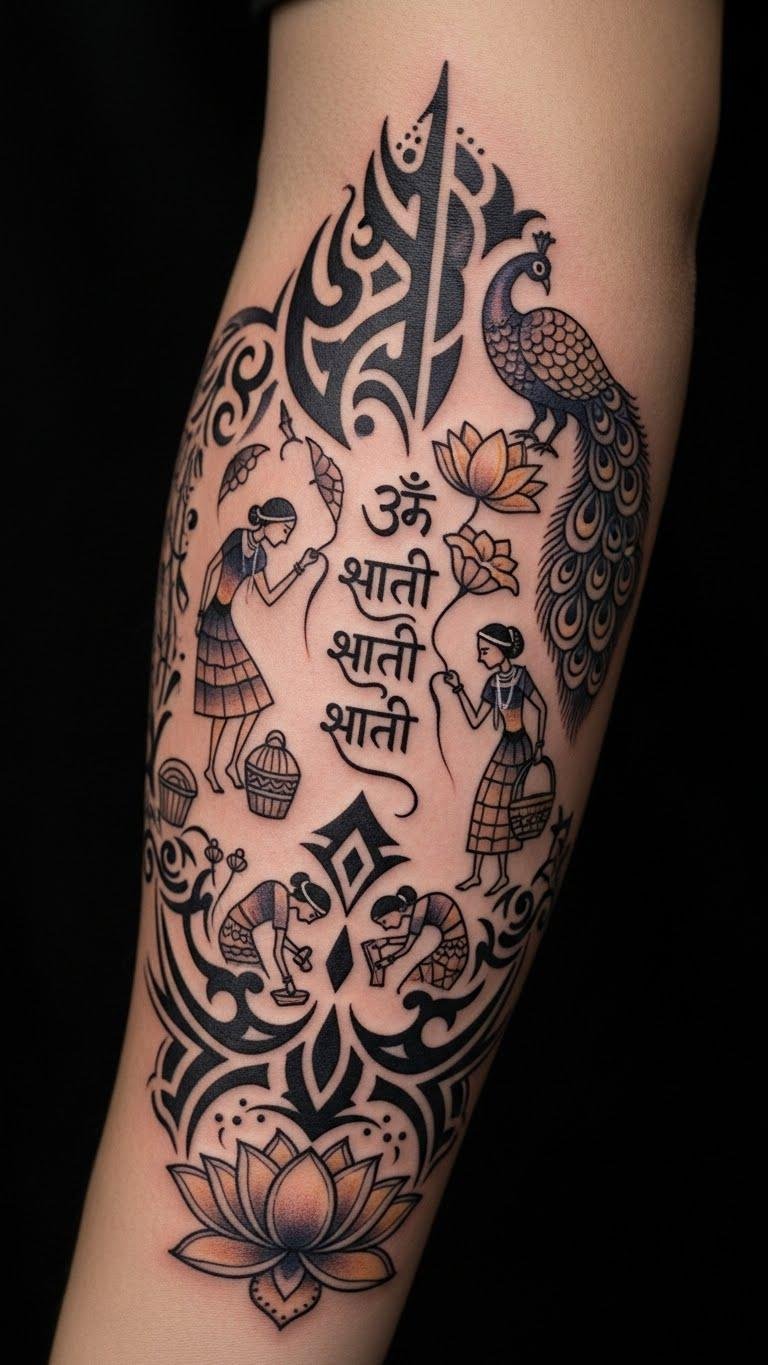
Though many traditional tattoo practices have faded in urban landscapes, a vibrant resurgence is happening as modern Indian tattoo artists passionately embrace and revive ancient techniques.
They’re infusing modern ink with ancestral motifs, creating a compelling cultural revival that speaks to identity and heritage. Each tattoo tells a story, reconnecting you to your roots while celebrating your unique journey through art and skin.
This design melds ancestral motifs and modern technique to symbolize continuity between past and present: the lotus for spiritual rebirth, the peacock for beauty and resilience, Warli figures for community and storytelling, and Sanskrit micro-script for personal lineage.
Emotionally it evokes pride, belonging, and a quiet defiance against cultural erasure. Ideal placement is along the outer forearm where the elongated composition reads clearly in motion; it can wrap slightly toward the elbow to suggest a journey and be shown or concealed as the wearer chooses.
The Impact of Urbanization on Tattoo Culture
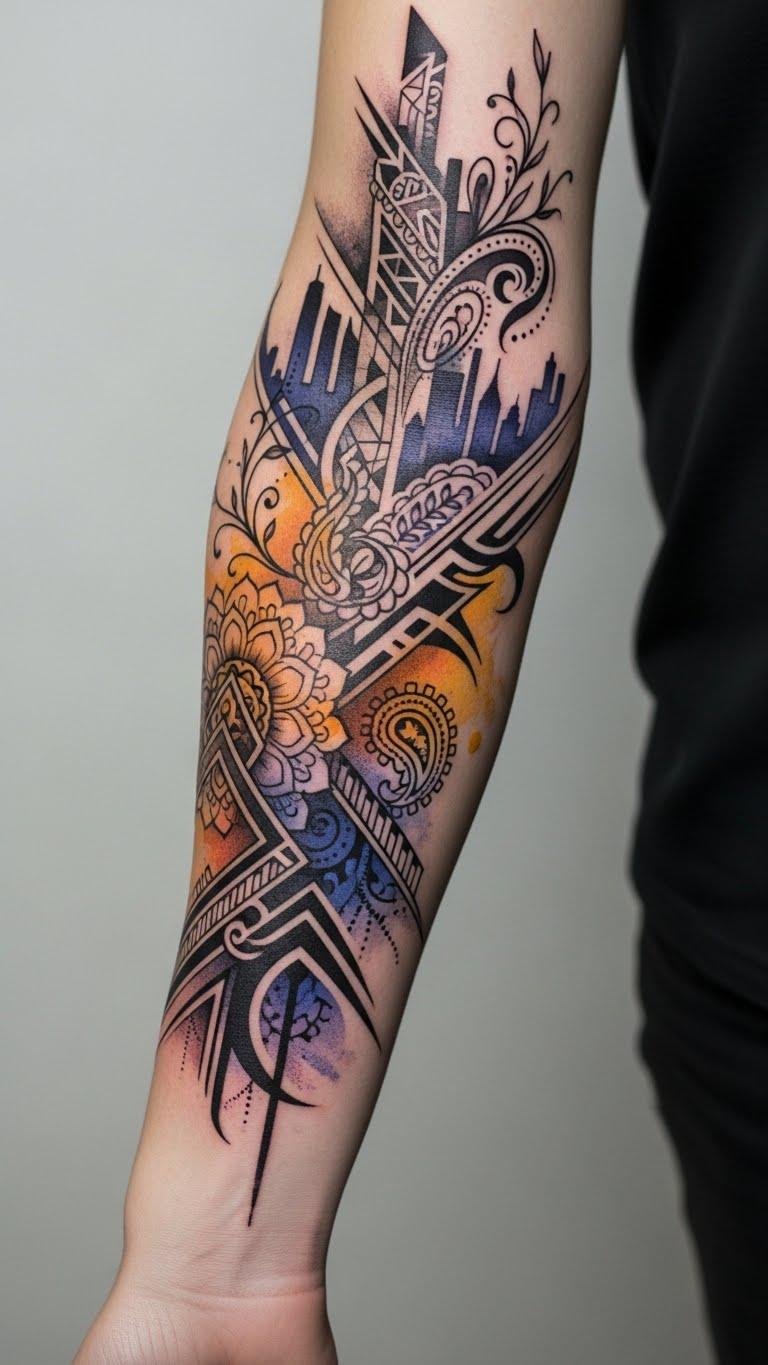
This design symbolizes the dialogue between heritage and contemporary life: mandalas and paisleys root the wearer in ancestral identity while geometric modern-art patterns and skyline silhouettes represent urban evolution and personal reinvention.
The saffron and indigo washes evoke cultural warmth and introspective depth; dotwork and negative space suggest resilience and openness.
Placed along the forearm, the piece reads both as a personal narrative visible to the wearer and as a public statement, balancing tradition with innovation and offering an emotional expression of belonging amid change.
Celebrating Diversity Through Regional Tattoo Styles
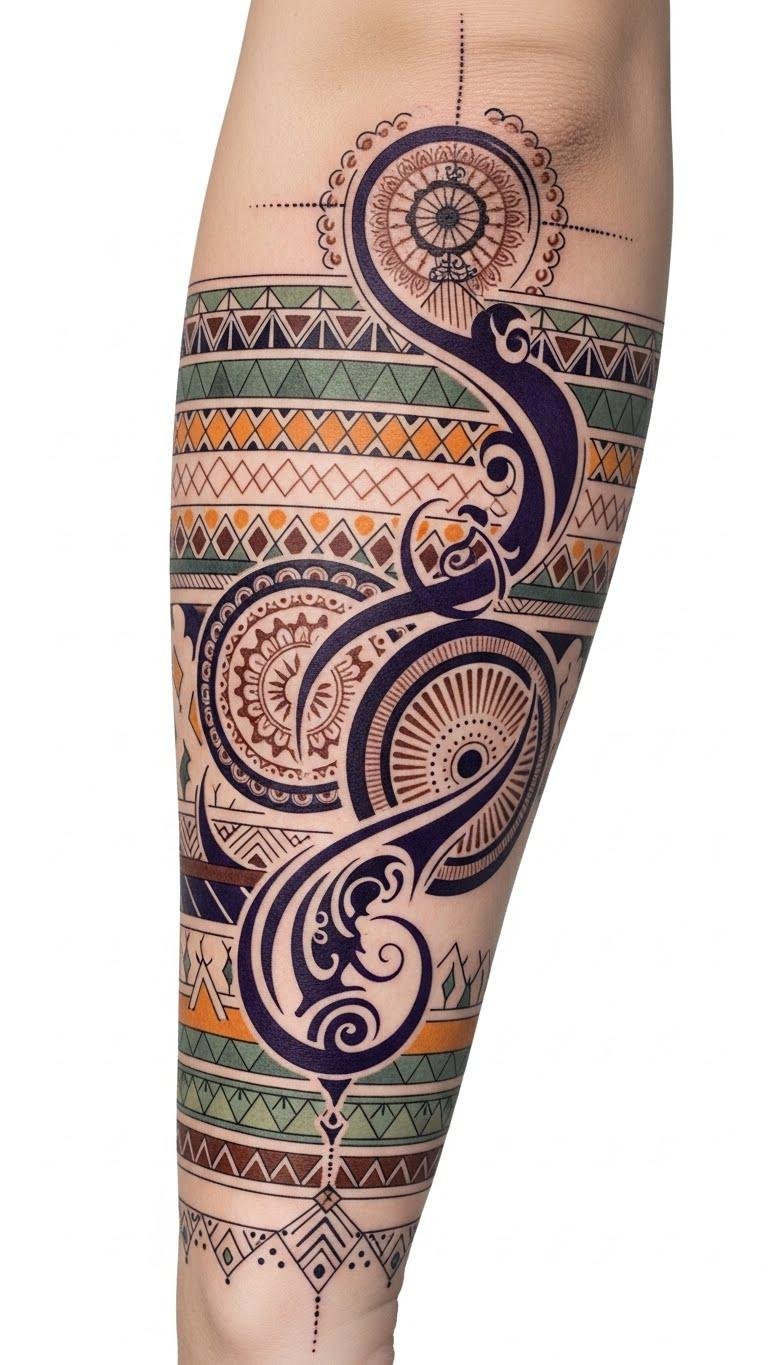
When you explore the vibrant world of Indian tattoos, you discover a stunning tapestry of regional styles that celebrate the rich diversity of the nation’s cultures and traditions.
From the geometric elegance of the Toda to the spiritual motifs of the Kutia Kondh, each design embodies cultural diversity, empowering you to express your unique identity through these enchanting regional tattoo styles.
This concept blends those elements to symbolize unity between structure and spirit: geometric Toda bands represent lineage and crafted order, while the flowing Kutia Kondh motifs evoke devotion and connection to nature.
Emotionally it feels grounded yet transcendent—rooted traditions meeting personal expression.
Ideal placements are a forearm wrap to showcase the linear geometry in motion or an upper back centerpiece where the mandalas and figures can radiate outward; choose placement that aligns with how publicly or privately you wish to share the cultural narrative.
Tattoos as a Form of Personal Expression
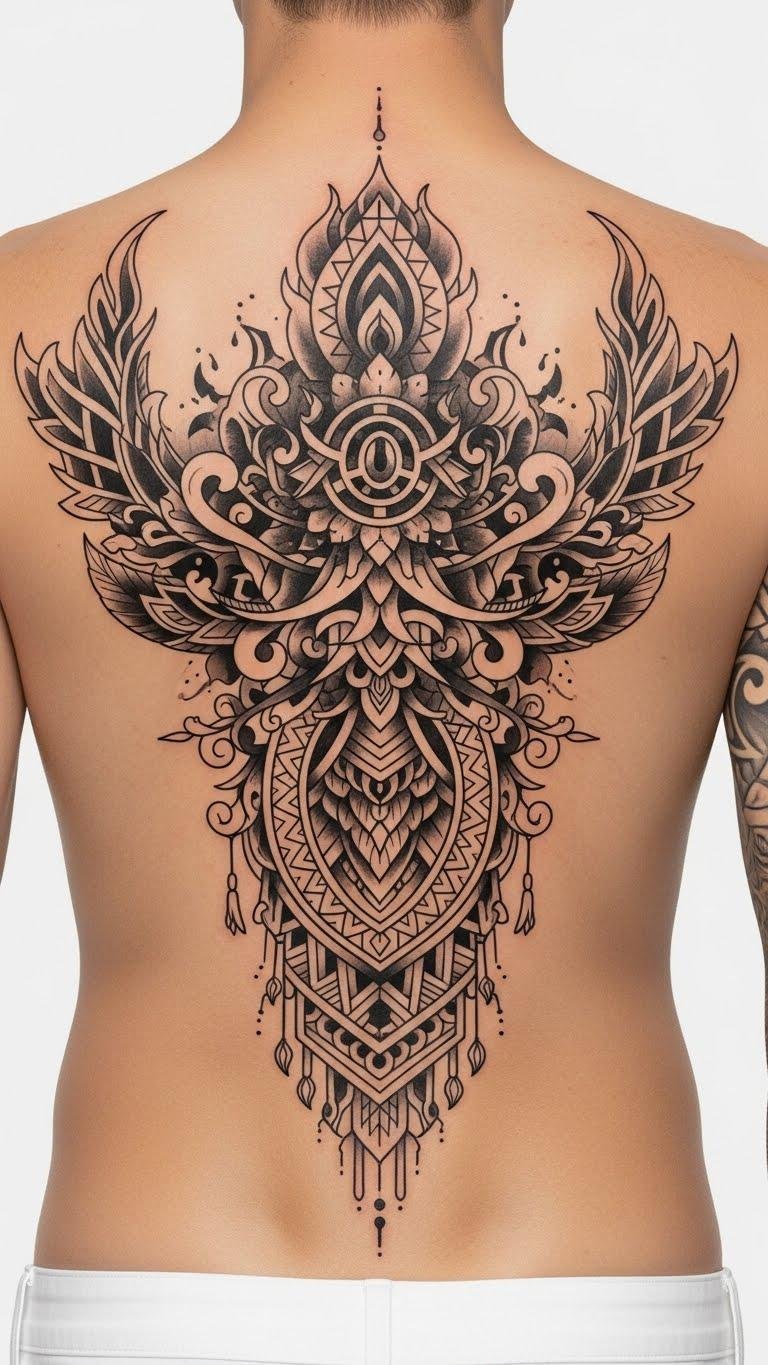
A flowing half-sleeve concept: a layered montage of symbolic motifs—interwoven threads, a compass, blooming native florals, and faint script lines—designed to follow the natural curve of the upper arm and shoulder; rendered in a mix of fine-line blackwork and soft watercolor accents to evoke narrative depth and warmth. Symbolism ties each element to chapters of personal history (threads for connections, compass for direction, florals for growth, script for memory), the emotional tone balances empowerment and vulnerability, and placement along the arm allows visibility when desired while wrapping respectfully around the body like a lived story.
References
- https://www.vice.com/en/article/tattoo-traditions-history-stick-and-poke-indigenous-tribes-india/
- https://thebetterindia.com/58170/india-tattoo-tradition-history/
- https://xtremeinks.com/blogs/artists-corner/tattooing-in-india-a-cultural-canvas-inked-in-tradition-and-modernity
- https://larskrutak.com/india-land-of-eternal-ink/
- https://cardinalguzman.wordpress.com/2013/03/31/the-history-of-tattoo-part-3-the-indians/
- https://swathimoorthy.wordpress.com/2017/07/27/tattoo-culture-in-india-then-and-now/